How To Fix Green Pool Water Fast: 2026 Guide
Table of Contents
- What You'll Need Before You Start
- Step 1: Test and Balance Your Water Chemistry
- Step 2: How to Shock a Pool to Kill Algae
- Step 3: How Long to Run Pool Pump After Shocking
- Step 4: How to Clean Pool Filter After Algae
- Step 5: Brush, Vacuum, and Remove Debris
- Common Mistakes to Avoid When Fixing Green Pool Water
- Frequently Asked Questions
Last Updated: September 13, 2026
What You'll Need Before You Start
Fixing green pool water starts with the right supplies, not the strongest chemical. Green water is algae, and it responds to a sequence: balanced chemistry, a heavy chlorine dose, filtration, and physical removal. Skip a step and the bloom returns.
Gather these before you begin:
- A Taylor Technologies pool water test kit guide or fresh test strips
- Liquid chlorine or calcium hypochlorite shock
- Muriatic acid and sodium bicarbonate for pH and alkalinity adjustment
- A stiff pool brush and a vacuum head with hose
- Algaecide (optional, for stubborn blooms)
- Gloves, safety glasses, and old clothes
Step 1: Test and Balance Your Water Chemistry
Balanced water makes shock work. Above pH 7.8, chlorine loses much of its killing power and you'll burn through shock without clearing the pool (the CDC).
Test these four values and correct them in order:
| Parameter | Target Range | Why It Matters |
|---|---|---|
| pH | 7.2-7.6 | High pH weakens chlorine |
| Total alkalinity | 80-120 ppm | Buffers pH swings |
| Calcium hardness | 200-400 ppm | Protects plaster and equipment |
| Cyanuric acid | 30-50 ppm | Stabilizes chlorine, but too much locks it up |
A common mistake is shocking first and testing later, which wastes chlorine. Bring pH down with muriatic acid if high, raise alkalinity with sodium bicarbonate if low. If cyanuric acid reads above 50 ppm, dilution with fresh water is the only real fix, high stabilizer holds chlorine in a form that can't fight algae.
Step 2: How to Shock a Pool to Kill Algae
Shocking means raising free chlorine far above normal levels to oxidize algae and contaminants. A green pool needs a heavy dose, not a maintenance one.
Choosing Your Shock
Two products dominate green-pool recovery:
- Liquid chlorine (sodium hypochlorite) is the workhorse. It adds chlorine without adding cyanuric acid, which matters because stabilizer tends to run high in repeatedly shocked pools. It raises pH temporarily, so retest after the dose.
- Calcium hypochlorite (cal-hypo) is a granular that dissolves fast and hits hard. It raises calcium hardness, so it is a poor choice for pools already near the top of the 200-400 ppm range or for some vinyl liners.
Avoid dichlor and trichlor shock for a green pool. Both add cyanuric acid, and once stabilizer climbs above roughly 50 ppm, chlorine locks into a form that can't fight algae, more stabilized shock makes it worse.
Dosing to Breakpoint
Breakpoint chlorination is where chlorine destroys everything consuming it, algae, bacteria, sweat, sunscreen, and chloramines. For most green pools, raise free chlorine to roughly 10-20 ppm, sometimes higher for severe blooms. The exact number depends on cyanuric acid: the higher the stabilizer, the more free chlorine you need.
Run the pump while adding shock, and add it at dusk so sunlight doesn't burn off the chlorine. Broadcast granular shock across the deep end; never dump it in one spot, which can bleach the liner or plaster.
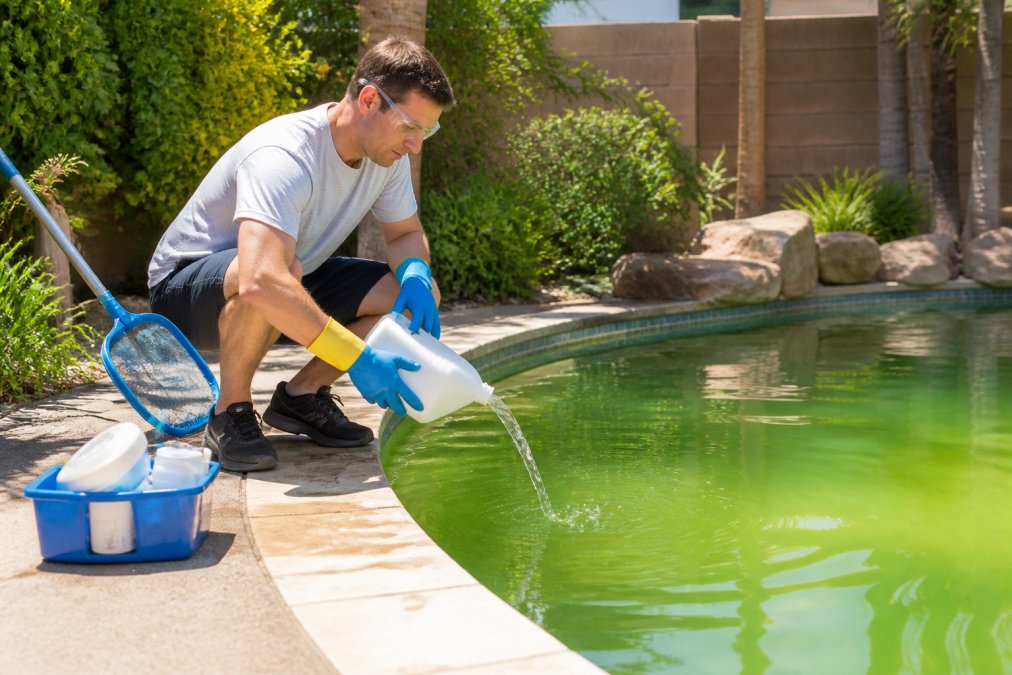
- Wear chemical-resistant gloves and splash goggles, not just sunglasses. A single splash of liquid chlorine or a puff of cal-hypo dust can cause serious eye injury.
- Add chemicals to water, never water to chemicals. Pouring water into concentrated shock can trigger a violent reaction.
- Never mix chlorine products with each other or with acid. Combining calcium hypochlorite and muriatic acid, or mixing different shock products, can release toxic chlorine gas.
- Store shock in a cool, dry place away from acid, algaecide, and any petroleum product. Vapors from adjacent containers can react.
- Pre-dissolve granular shock in a clean plastic bucket of pool water before adding it, unless the label says otherwise. This prevents bleaching the liner and reduces dust.
- Keep the pool closed to swimmers until free chlorine drops below 5 ppm and pH is back in the 7.2-7.6 range.
Test free chlorine the next morning. If it dropped near zero, the algae consumed it and you need a second dose, normal for a bad bloom.
When DIY Shock Isn't Enough
Most green pools clear with two or three shock cycles plus filtration and brushing. Knowing when to stop pouring money into chemicals saves time and cash.
Signs the bloom is beyond a typical DIY fix:
- Free chlorine won't hold overnight after three consecutive heavy doses.
- The water stays green even though pH, alkalinity, and stabilizer are all in range.
- The filter pressure won't drop after cleaning, or the pump is moving noticeably less water than usual.
- The pool has been green for more than two weeks, or the water is black-green rather than cloudy green.
- You see visible algae mats on the walls that return within a day of brushing.
Any of these usually points to equipment, a failing pump, channeled sand bed, torn DE grids, or a cartridge bypassing debris, not chemistry. Another case of shock and a week of 24/7 pumping often costs more than a single diagnostic visit, where a technician can pressure-test the system, inspect the media, and confirm the pump is moving its rated flow. Professional diagnosis can save money over repeated chemical purchases.
Step 3: How Long to Run Pool Pump After Shocking
Run the pump continuously for at least 24 hours after shocking, and keep it running until the water clears. Circulation moves chlorinated water through the filter and past every surface where algae hides.
A single 24-hour cycle handles a mild bloom. A dense green pool often needs 48 to 72 hours of continuous runtime. Don't shut the pump off overnight to save electricity; that pause lets algae settle and regroup.
Watch the filter pressure gauge. A rise of 8-10 psi above the clean baseline means the filter is loading up with dead algae and needs attention before it stops circulating water properly.
Step 4: How to Clean Pool Filter After Algae
Dead algae ends up in your filter, and a clogged filter can't clear the pool. Cleaning it finishes the job, but procedure, timing, and failure modes differ by filter type. Treating them the same is the most common reason a pool stays cloudy after the water turns from green to gray.
Note your clean baseline pressure on the filter tank when the system is new or freshly cleaned. Every reading during the bloom is measured against that number, not a generic "8-10 psi" rule of thumb.
Sand Filters
Sand traps debris in the top few inches of the bed, which loads fast during a heavy bloom.
- Backwash when pressure rises 8-10 psi above baseline, or when return flow visibly weakens.
- Run the backwash until the sight glass runs clear, then switch to rinse for 30-60 seconds before returning to filter. Skipping the rinse sends dirty water back into the pool.
- A sand bed that has been through two or three major blooms in one season may channel, water finds paths through the sand instead of filtering through it. If backwashing no longer drops pressure, the bed needs replacement. Sand typically lasts about five years; heavy algae seasons shorten that.
- Consider adding a small amount of diatomaceous earth through the skimmer after backwashing. It coats the sand and catches the fine dead-algae particles that sand alone lets pass, a common, nearly free technician trick.
Cartridge Filters
Cartridges are the most labor-intensive during a bloom, no backwash cycle, everything manual.
- Pull the cartridge and hose it top-down, pleat by pleat, with a wide fan nozzle. A narrow jet drives debris deeper into the pleats.
- Soak the cartridge in a commercial filter cleaner for at least an hour if algae staining or oils persist. Dish soap leaves residue that foams in the pool.
- Inspect the pleats for tears and the end caps for cracks. A torn pleat lets debris bypass the media entirely, which is why some pools stay cloudy no matter how often you clean.
- Keep a spare cartridge on hand. During a bad bloom you may need to clean every 12-24 hours, and swapping cartridges keeps the pump running while the dirty one soaks.
- Replace cartridges when the pleats stay matted or the banding is stretched, usually every one to three years depending on bather load and pollen.
DE Filters
DE filters catch the finest particles of any media, making them best for polishing a pool after a bloom, and the most demanding to maintain.
- Backwash when pressure rises 8-10 psi above baseline. DE backwash uses a lot of water, so watch your pool level.
- After backwashing, recharge the filter with fresh DE through the skimmer. The amount is printed on the tank, typically 1 pound per 10 square feet for a full charge, about 80 percent of that after a backwash. Skipping the recharge leaves the grids unprotected and they can rupture.
- Every few months, tear the filter down, hose the grids, and soak them in filter cleaner. Do a full teardown after any major bloom.
- Never run a DE filter without DE. The grids will clog with debris and the pressure will spike within hours.
What to Do While the Filter Is Offline
If you shut the pump to clean a cartridge or tear down a DE filter, algae keeps multiplying. Two things help:
- Brush the pool right before you shut down so suspended algae is already in the water column and will be pulled into the filter as soon as it restarts.
- Add a maintenance dose of liquid chlorine after the filter is back online to replace what was consumed during the downtime.
Pentair's guide to pool filter maintenance walks through backwashing and recharge procedures for each type. Clean the filter daily during a bad bloom, then return to your normal schedule once the water clears.
Step 5: Brush, Vacuum, and Remove Debris
Physical removal clears what chemicals can't. Brush walls, steps, and the floor to lift algae into suspension, then vacuum before it settles.
Skim surface debris first so leaves and bugs don't clog the vacuum or consume chlorine. Vacuum to waste if your system allows, sending algae-laden water out instead of back through the filter, and empty the skimmer basket as you go.
Repeat the brush-vacuum cycle daily until the water is clear and free chlorine holds overnight, the real signal the bloom is dead.
Common Mistakes to Avoid When Fixing Green Pool Water
Most failed green-pool fixes trace back to a handful of errors. Avoid these to clear the water faster.
- Shocking without balancing first. High pH neutralizes chlorine before it can work.
- Using too little chlorine. A maintenance dose won't touch a bloom. You need breakpoint chlorination.
- Skipping the brush. Algae's protective layer keeps chlorine from reaching it.
- Turning the pump off too soon. Circulation must run until the water clears, not just overnight.
- Ignoring the filter. A clogged filter recycles algae back into the pool.
- Adding algaecide before shock. Algaecide is a preventive and finisher, not a first strike. Shock first, then use algaecide to keep algae from returning.
If the pool stays green after several days of correct treatment, the cause is usually filtration, not chemistry. A filter not catching fine particles, or a pump not moving enough water, keeps water cloudy no matter how much chlorine you add, where a technician's diagnostic eye can help identify the root cause.
A green pool is a chemistry and filtration problem, and it clears fastest when both are handled in order. When repeated shock treatments aren't holding, the issue usually sits in the equipment, not the water, where professional diagnosis can be beneficial.
EcoClean Pool Services, Llc. handles exactly this: eco-friendly chemical balancing, filter and pump diagnostics, and UV/Ozone system installations that reduce how much chlorine your pool needs in the first place. Our certified technicians back every visit with a One-Year Price Guarantee, and first responders get our MVP Discount. Get started with EcoClean Pool Services, Llc. and get back to a pool your family can actually swim in.
Frequently Asked Questions
How long does it take to recover a green pool?
Recovery time depends on how green the water is, but most pools clear within 24 to 72 hours after a proper shock treatment. Severely neglected pools with thick algae may take up to a week. You'll need to run your pump continuously, brush the walls daily, and clean your filter regularly. Testing your water chemistry every day helps you stay on track and adjust chemicals as needed.
Can you fix a green pool without draining it?
Yes, most green pools can be fixed without draining. The key is to kill the algae with a heavy shock treatment, then filter out the dead particles. However, if your cyanuric acid level is extremely high (above 80 ppm), draining and refilling may be the only way to restore chlorine effectiveness. Always test your stabilizer level before deciding.
Is it safe to swim in a pool that is slightly green?
No, it's not safe. Even slightly green water indicates algae growth, which can harbor bacteria like E. coli and cause skin rashes or gastrointestinal illness. The water may also have unbalanced pH or low chlorine levels, reducing its ability to kill pathogens. Wait until the water is clear, chlorine levels are between 1 and 3 ppm, and pH is between 7.2 and 7.8 before swimming.
What is the fastest way to clear a green pool?
The fastest method combines a heavy shock treatment with continuous pump operation and frequent filter cleaning. First, balance your pH and alkalinity. Then add a chlorine shock at the breakpoint level, usually 3 to 5 times the normal dose. Run your pump 24 hours a day, brush the walls twice daily, and clean or backwash your filter every few hours until the water clears.


Comments
Post a Comment