Clear Cloudy Pool Water Naturally: Step-by-Step
Table of Contents
- What Causes Cloudy Pool Water
- Test Your Water Chemistry First
- How to Balance Pool Alkalinity Naturally
- How to Clean Pool Filters Naturally
- Using Natural Pool Clarifiers
- Run Your Pump and Monitor Water Circulation
- Benefits of UV and Ozone Pool Systems for Long-Term Clarity
- Prevent Cloudy Water Before It Starts
- Frequently Asked Questions
Last Updated: September 27, 2026
Clear Cloudy Pool Water Naturally: Step-by-Step
Cloudy pool water ruins your backyard experience. At EcoClean Pool Services, we've helped homeowners restore crystal-clear water without relying solely on harsh chemicals. The good news is that you can clear cloudy pool water naturally using proven methods that work with your pool's natural systems.
This guide walks you through exactly how to diagnose the problem, balance your water, and maintain clarity long-term. Whether you're dealing with suspended particles or chemical imbalances, these steps will get your pool sparkling again.
What Causes Cloudy Pool Water
Cloudy water typically stems from three root causes: poor filtration, chemical imbalances, or a combination of both. Understanding the source is critical because the fix depends on what's actually wrong.
Suspended particles are the most common culprit. Dust, pollen, algae spores, and debris circulate through your water when your filter isn't running long enough or isn't clean. These microscopic particles scatter light, creating that hazy appearance.
Chemical imbalances also trigger cloudiness. When your pH levels drift too high or too low, when total alkalinity is off, or when chlorine levels drop, your water can turn murky. According to C2C Pools pool maintenance guide, running your pump for 24-48 hours combined with proper filter maintenance is the standard protocol for clearing water caused by filtration failures.
Bather load matters too. More swimmers introduce sweat, sunscreen, and oils that cloud water. Heavy use requires more frequent filter cleaning and longer pump runtime.
The key insight: most cloudy water isn't a single problem. It's usually filtration plus chemistry working against you simultaneously.
Test Your Water Chemistry First
Before you treat anything, test your water. Guessing wastes time and money.
Get a reliable water testing kit and check these four critical levels:
- Free chlorine: Should be 1-3 ppm (parts per million)
- pH: Should be 7.2-7.6
- Total alkalinity: Should be 80-120 ppm
- Calcium hardness: Should be 200-400 ppm
Write down your results. These numbers tell you exactly what needs adjustment. If free chlorine is below 1 ppm, your sanitizer isn't strong enough. If pH is above 7.8, your water chemistry is fighting against clarity.
Many pool owners skip testing and jump straight to shock treatment. That's backwards. You might waste product treating a problem that doesn't exist. A quick test takes five minutes and saves you money.
How to Balance Pool Alkalinity Naturally
Total alkalinity is your water's pH buffer. It stabilizes pH levels so they don't swing wildly. When alkalinity is too low, pH bounces around. When it's too high, pH climbs and won't come back down easily.
If alkalinity is low (below 80 ppm): Add an alkalinity increaser. This raises both alkalinity and pH slightly, which is fine. Follow product instructions for your pool size. Run your pump for 24 hours after adding it.
If alkalinity is high (above 120 ppm): Lower it by adding a pH decreaser (sodium bisulfate). This drops both alkalinity and pH. Again, follow dosing instructions and run your pump for a full day.
The natural approach here means using standard chemical adjustments that work with your pool's water chemistry rather than fighting it. You're balancing what's already there, not adding exotic treatments.
Industry recommendations now prioritize regular testing and daily chemical monitoring to maintain water clarity, according to The Home Depot pool maintenance guide. This preventative approach beats reactive shock treatments.
How to Clean Pool Filters Naturally
Your filter does the real work. A clogged or dirty filter can't remove suspended particles, no matter how long you run your pump. Cleaning it is non-negotiable for clear water.
Cartridge filters need rinsing every 2-4 weeks during heavy use. Turn off your pump. Remove the cartridge. Rinse it with a garden hose, spraying from top to bottom. The water should run clear. Don't use a pressure washer, it damages the pleats.
Sand filters need backwashing. Turn the multiport valve to "backwash." Run the pump for 3-5 minutes until the sight glass shows clear water. Turn the valve to "rinse" and run for 1 minute. Then return to "filter" mode.
Diatomaceous earth (DE) filters work similarly to sand filters but need more frequent backwashing because DE is finer. Backwash when the pressure gauge reads 8-10 psi above normal operating pressure.
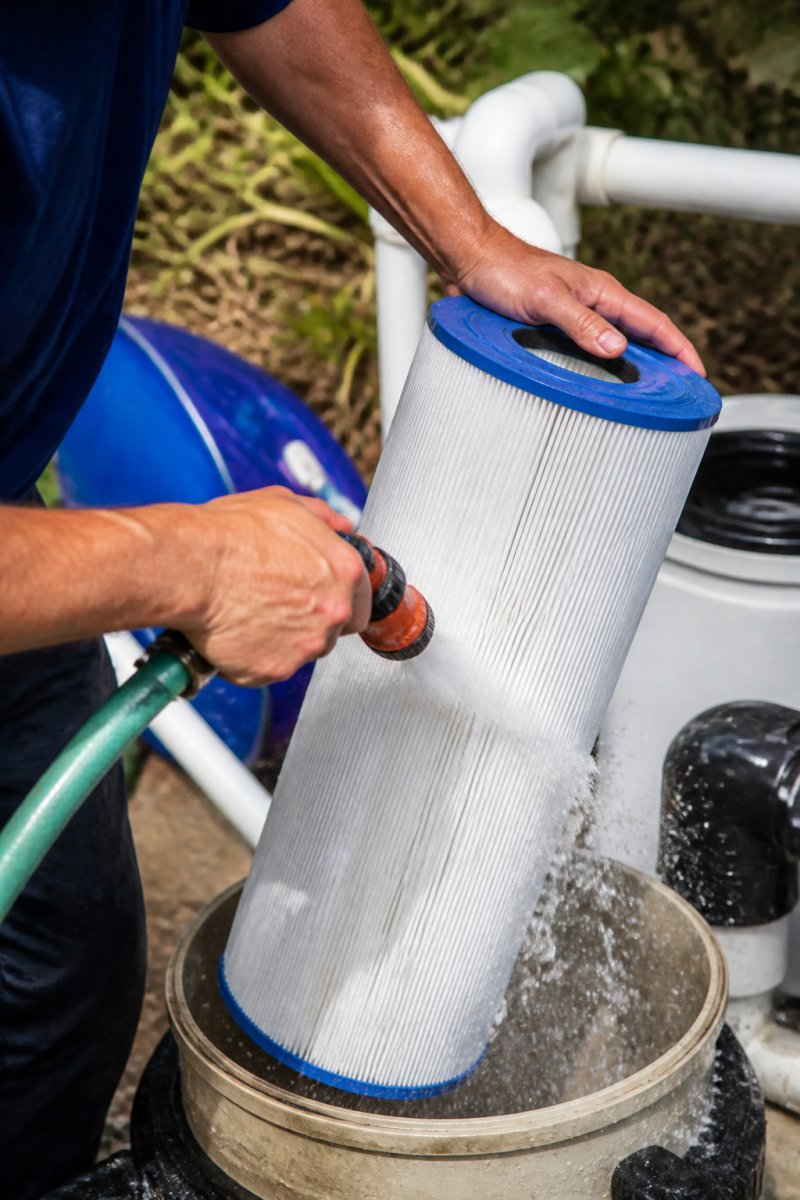
A clean filter removes microscopic contaminants that your eyes can't see. This is where natural clarity actually happens, through mechanical filtration, not chemicals.
Using Natural Pool Clarifiers
Pool clarifiers work by clumping tiny suspended particles together so your filter can catch them. The key to natural clarification is understanding which methods align with your water chemistry without introducing synthetic polymers or heavy chemical residues.
How clarifiers work mechanically: Clarifiers bind particles into larger flocs (clumps) that either settle to the bottom or get trapped by your filter media. As water circulates through your pump, these larger particles are easier for your filter to capture than microscopic individual particles. This is a physical process, not a chemical one, you're leveraging your existing filtration system more effectively.
Natural clarifier options:
Enzyme-based clarifiers break down organic contaminants, sunscreen, body oils, sweat, and algae byproducts, that cause water to appear hazy. Unlike synthetic polymer clarifiers, enzyme clarifiers target the root cause of organic cloudiness. They work slower (24-48 hours) but don't leave chemical residue. This is the most natural approach for pools with heavy bather load or high pollen exposure.
Mineral-based clarifiers use naturally occurring minerals like silica or diatomaceous earth to bind particles. These clarifiers are non-toxic and break down into harmless sediment. They're ideal if you're sensitive to synthetic additives or want to minimize chemical buildup over time.
Standard clarifiers (polyaluminum chloride or PAC-based) work faster but introduce aluminum compounds. If you choose this route, use the minimum effective dose and monitor your filter pressure closely.
Flocculants work faster than clarifiers by aggressively clumping particles so they sink to the bottom in 2-4 hours. You then vacuum the sediment from the pool floor. Flocculants are stronger but require immediate manual action and can temporarily reduce water circulation if not vacuumed promptly. Reserve flocculants for severe cloudiness when enzyme or mineral clarifiers haven't worked within 48 hours.
The natural choice for most homeowners: Start with an enzyme-based clarifier if cloudiness is mild to moderate and caused by organic matter (common in summer).
Run Your Pump and Monitor Water Circulation
Many homeowners underestimate pump runtime. They run it 8 hours, see no improvement, and assume they need shock treatment. Try 48 hours of continuous running first. Patience with filtration beats expensive chemical treatments.
Benefits of UV and Ozone Pool Systems for Long-Term Clarity
UV and ozone systems represent the natural evolution of pool water treatment. They destroy contaminants without adding residual chemicals that build up over time.
Prevent Cloudy Water Before It Starts
Daily natural maintenance tasks:
- Test free chlorine and pH (same time each day for consistency)
- Empty skimmer baskets and remove debris before it breaks down into particles
- Check pump pressure and listen for unusual sounds
- Limit bather load during peak heat (more swimmers = more oils, sweat, and sunscreen in the water)
Weekly tasks:
- Test all four water chemistry levels
- Clean cartridge or backwash sand filter (a clean filter is your primary defense against cloudiness)
- Brush pool walls and floor to prevent algae and sediment buildup
- Add enzyme-based pool treatment (optional but highly effective for organic cloudiness prevention)
Monthly tasks:
- Deep clean filter media
- Check calcium hardness and adjust if needed
- Inspect pump and filter for wear or damage
- Review your water source: if you use well water, test for iron or manganese, which cause orange or brown cloudiness
Natural preventative strategies most homeowners miss:
This routine prevents the chemical imbalances and filtration failures that cause cloudiness. Most homeowners who maintain this schedule, especially those using enzyme-based preventative treatments, never see cloudy water. EcoClean's weekly pool maintenance programs handle these tasks for you, including enzyme treatment and filter cleaning tailored to your pool's specific needs and bather load. Our technicians test chemistry, clean filters, and catch problems before they become visible.
Frequently Asked Questions
What is the most common cause of cloudy pool water?
Cloudy pool water is usually caused by chemical imbalances, particularly low pH levels or total alkalinity, or by filtration failures that allow suspended particles and microscopic contaminants to remain in circulation. Poor water circulation due to an underperforming pump or clogged filter also contributes significantly. Testing your water chemistry with a pool testing kit is the first step to identifying the root cause.
How do I balance pool alkalinity naturally?
Test your total alkalinity with a water testing kit. If levels are low, add alkalinity increaser (sodium bicarbonate) in small amounts while running your pump. If alkalinity is high, reduce it by lowering pH levels slightly and allowing the pool to circulate. Maintaining total alkalinity between 80-120 ppm helps stabilize pH and prevents cloudiness caused by chemical imbalance.
How long does it take to clear cloudy pool water?
Most cloudy water clears within 24-48 hours when you run your pump continuously, maintain proper water chemistry, and keep your filter clean. If using natural clarifiers or flocculants, allow 12-24 hours for sedimentation. Persistent cloudiness may indicate a deeper filtration issue or severe chemical imbalance requiring professional diagnosis.
Can natural enzymes help clear cloudy pool water?
Natural enzyme products can help reduce organic contaminants and improve water clarity as a preventative measure, but they work best alongside proper filtration and chemical balance. They are not a standalone solution for existing cloudiness caused by suspended particles or chemical imbalances. Use them as part of a regular maintenance schedule rather than a quick fix.


Comments
Post a Comment