Cost of Eco-Friendly Pool Systems: 2026 Guide
Table of Contents
- Understanding Eco-Friendly Pool System Types and Their Price Range
- Saltwater Pool Conversion Cost: Breaking Down the Numbers
- UV Pool System Cost and Installation Expenses
- Natural Swimming Pool Cost: Construction and Filtration
- Energy-Efficient Pool Pump Cost and Long-Term Savings
- Operating Costs and Annual Maintenance Expenses
- Calculating Payback Period and Total Cost of Ownership
- Retrofit vs. New Build: Where Costs Differ Most
- Frequently Asked Questions
Last Updated: October 9, 2026
Understanding Eco-Friendly Pool System Types and Their Price Range
Understanding the cost of eco friendly pool systems requires considering the system type, pool size, and whether you're building new or retrofitting an existing pool, as costs vary dramatically across these factors. At EcoClean Pool Services, we've helped homeowners navigate these choices for years, and the numbers tell a clear story: upfront investment differs significantly, but long-term savings often justify the initial expense.
Eco-friendly pools vary widely in cost depending on the system type, pool size, and whether you're building new or retrofitting an existing pool. The wide range reflects fundamental differences in how each system works and what it requires to install.
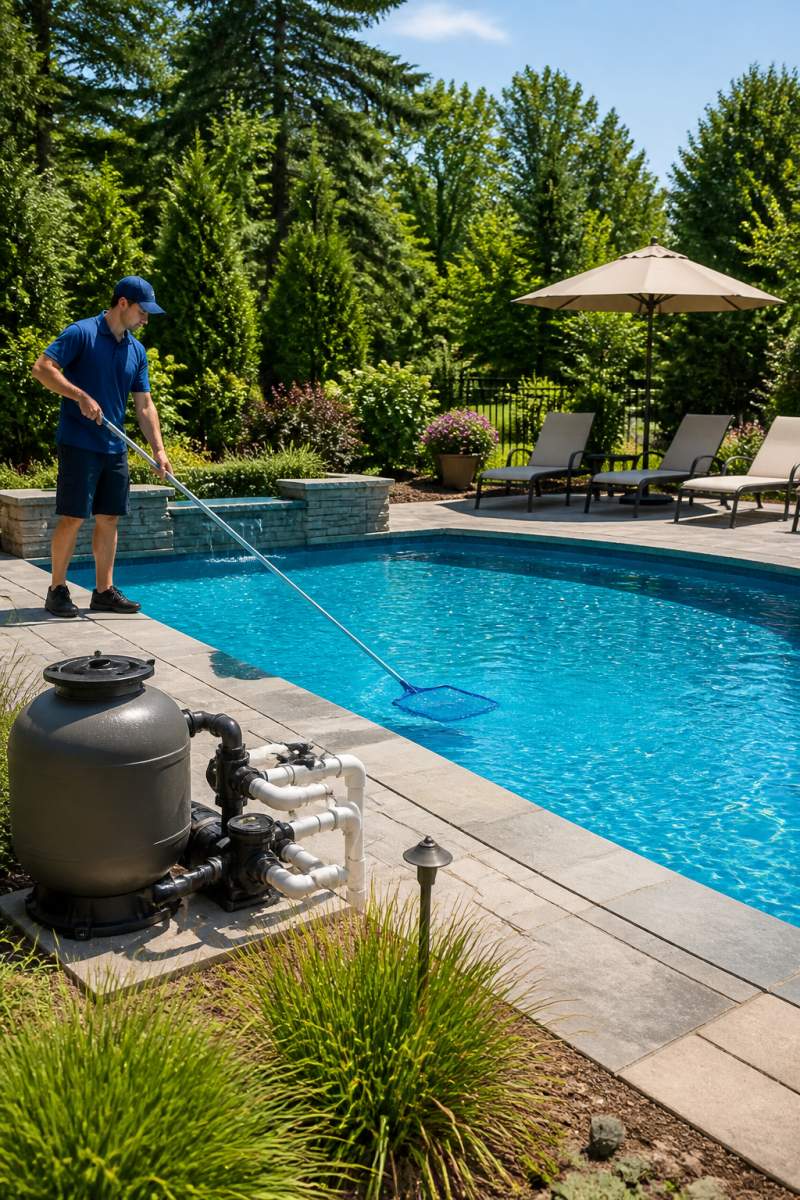
Let's break down the major types and what you'll actually spend.
Natural Swimming Pools
Natural swimming pools use biological filtration instead of chemicals. Plants, gravel, and beneficial bacteria clean the water naturally. Construction costs for natural swimming pools vary depending on size and complexity.
Why the premium? Natural pools require a separate regeneration zone where plants filter the water. This takes space and careful engineering. You're essentially building two pools instead of one. The filtration system itself is more complex than a traditional sand filter.
The tradeoff: once built, operating costs drop significantly. You're not buying chlorine or running heavy chemical systems. Energy consumption is lower because the filtration runs gentler. Many owners report significant reductions in energy use compared to conventional pools.
Natural swimming pools work best for homeowners with space for a regeneration area and patience for the biological system to establish itself. They're not the fastest solution, but they're among the most sustainable.
Saltwater Systems
Saltwater chlorination converts salt into chlorine through electrolysis. This sounds like a silver bullet, but it's not. The saltwater chlorinator itself costs more upfront than a traditional chlorine system, and it requires electricity to operate.
The real appeal: you're not manually adding chlorine, and the water feels gentler on skin and eyes. Operating costs are moderate because salt is cheaper than buying chlorine regularly. However, the equipment has a lifespan, most chlorinators last 5-7 years before needing replacement.
Installation costs for a saltwater conversion depend on whether you already have a pool. New construction runs higher because the system integrates into the initial design. Retrofitting an existing pool is cheaper but still requires equipment replacement and plumbing modifications.
UV and Ozone Treatment Systems
UV light and ozone oxidize contaminants without producing chemical byproducts. These systems work alongside minimal chlorine or salt systems, not as replacements. They're supplemental technologies that reduce chemical dependency.
The advantage: dramatically lower chemical use. According to Hella Water's swimming pool maintenance case study, pools using advanced treatment systems report 20% reductions in chemical use. UV and ozone systems pair well with saltwater setups to create a hybrid approach.
The cost is moderate, less than natural pools, comparable to saltwater systems. But they require electricity and occasional bulb or ozone generator replacement. This isn't a one-time investment; it's an ongoing commitment to maintenance.
Solar-Heated Pools
Solar panels heat pool water, reducing reliance on gas or electric heaters. Installation costs depend on roof space and sun exposure. The cost of a typical residential solar heating system varies widely by location and pool size.
The payback is compelling. Solar heating can significantly cut energy costs for heating. The payback period for the system varies depending on climate and usage.
Solar heating works best paired with a pool cover to reduce evaporation. Together, they create a genuinely efficient system. The combination cuts both heating and water loss simultaneously.
Saltwater Pool Conversion Cost: Breaking Down the Numbers
Converting an existing pool to saltwater requires installing a saltwater chlorinator. Installation labor and balancing the pool chemistry are also necessary.
Total conversion cost varies depending on the specific system and installation requirements. This can be one of the more cost-effective eco-friendly upgrades because you're keeping the existing pool structure and plumbing.
The operating difference is notable. Saltwater systems can use less chemical than traditional chlorine systems over a year. The cost of salt and electricity for the chlorinator varies annually.
Over time, a saltwater conversion can lead to savings in chemical costs. The total savings and payback period depend on various factors, including electricity costs.
The catch: saltwater chlorinators degrade over time. Expect to replace the cell periodically. This is a planned expense that factors into long-term budgeting.
UV Pool System Cost and Installation Expenses
UV systems vary in cost depending on pool size and flow rate. Larger pools may require higher-capacity UV units. Installation involves plumbing the UV chamber into the circulation line.
Ozone generators vary in cost because they're more complex. Both systems require electricity to operate, which adds to your utility bill.
The real cost emerges in maintenance. UV bulbs need periodic replacement. Ozone generators also require periodic servicing and component replacement. Over time, expect ongoing costs for bulbs and maintenance.
UV and ozone aren't standalone solutions, they work best with minimal chlorine or saltwater systems. This hybrid approach costs more upfront than either system alone but delivers the lowest chemical use of any option.
Natural Swimming Pool Cost: Construction and Filtration
Natural swimming pools vary significantly in cost to build, depending on size and complexity.
These costs include excavation, the swimming zone, the regeneration zone with plants and gravel filtration, and the circulation system. You're essentially building two pools, the place you swim and the place where water gets cleaned.
Installation takes time because the biological system needs to establish itself. The plants must root, bacteria must colonize the gravel, and the ecosystem must balance.
Operating costs are remarkably low. No chlorine, no saltwater chlorinator, minimal electricity for the circulation pump. Annual costs for natural pools can be significantly lower than conventional pools.
The payback calculation is interesting. A natural pool typically involves a higher initial investment compared to a conventional inground pool. The payback period through lower operating costs varies significantly depending on the comparison system and individual savings.
Energy-Efficient Pool Pump Cost and Long-Term Savings
Variable-speed pumps have a higher initial cost compared to single-speed pumps. However, the payback period can be faster than expected.
A variable-speed pump can significantly cut electricity use compared to a single-speed pump running continuously, leading to annual savings on electricity.
The payback period for a variable-speed pump can be relatively quick. Over the pump's lifespan, it can lead to substantial electricity cost savings.
Pairing a variable-speed pump with a pool cover and solar heating creates a genuinely efficient system. The pump runs less because the cover reduces evaporation and solar heating reduces the need for supplemental heat. EcoClean Pool Services recommends this combination to clients seeking maximum efficiency.
Operating Costs and Annual Maintenance Expenses
Annual operating costs vary dramatically by system type:
| System Type | Annual Chemical Cost | Annual Electricity | Total Annual Cost |
|---|---|---|---|
| Conventional chlorine pool | $300-$500 | $400-$600 | $700-$1,100 |
| Saltwater system | $100-$200 | $150-$300 | $250-$500 |
| Natural swimming pool | $200-$500 | $50-$150 | $250-$650 |
| UV/Ozone hybrid | $50-$100 | $200-$400 | $250-$500 |
| Solar-heated pool | $200-$400 | $50-$150 | $250-$550 |
These estimates are general and actual costs can vary depending on pool size, climate, and other factors.
When evaluating the cost of eco-friendly pool systems, some systems offer lower operating costs annually. Natural pools can also significantly undercut conventional pools in terms of operating expenses.
Chemical costs are only part of the equation. Labor for weekly maintenance varies depending on location and pool size. If you maintain your own pool, you save this cost but invest your time instead.
Calculating Payback Period and Total Cost of Ownership
Payback period is simple math: divide the upgrade cost by annual savings, and you get years to payback.
Calculating the payback period involves dividing the upgrade cost by annual savings. For example, a system with a certain upgrade cost and annual savings would have a specific payback period. The system's lifespan can extend beyond the payback period, leading to long-term savings.
Total cost of ownership accounts for replacement costs. A saltwater chlorinator cell requires periodic replacement. Over a 20-year period, this involves several replacements, contributing to the total cost of ownership.
When considering the total cost of ownership, including initial investment and replacements, a saltwater system can offer significant savings over two decades compared to a conventional pool's chemical and maintenance expenses.
Natural pools have a different equation. Initial cost for a natural pool is typically higher, but operating costs are low. Over 20 years, the total cost of a natural pool can be comparable to or even less than a conventional pool when factoring in chemical, maintenance, and energy expenses, especially if considering the potential property value increase from an attractive landscape feature.
Retrofit vs. New Build: Where Costs Differ Most
Retrofitting an existing pool is always cheaper than building new, but the savings vary by system type.
Saltwater conversion on an existing pool is generally less expensive than building a new saltwater pool from scratch, as it utilizes the existing structure.
Natural swimming pool retrofits are generally not feasible, as converting a conventional pool to a natural pool typically requires rebuilding. Therefore, if you desire a natural pool, new construction is usually the approach.
UV/ozone systems retrofit easily by adding equipment to the circulation line. The cost for new pools with UV/ozone systems is typically higher as it's part of the initial design.
Solar heating retrofits vary in cost. New pools with solar built in can have similar costs because installation is integrated from the start.
The biggest cost difference: labor. Retrofitting requires custom plumbing and integration with existing equipment. New builds can optimize everything upfront.
For many homeowners, retrofitting an existing pool with saltwater or UV/ozone systems can be a financially sound choice, offering eco-friendly benefits without the higher cost of new construction. If you're building a new pool, investing in natural filtration or solar heating from day one can often be more cost-effective than retrofitting later.
Choosing an eco-friendly pool system means weighing upfront costs against long-term savings, your available space, and how much maintenance you're willing to handle. The good news: every eco-friendly option saves money compared to conventional pools once you factor in a 10-20 year timeline. At EcoClean Pool Services, we help homeowners evaluate these systems and manage the transition through our Pool Equipment Upgrades and Pool Ozone and Ultra Violet Water Treatment services.
Frequently Asked Questions
How much does an eco-friendly pool system cost to install?
Installation costs for eco-friendly pool systems vary widely depending on the type. Natural swimming pools, saltwater conversion systems, and UV/ozone treatment setups each have different price structures. Costs depend on your pool size, existing equipment, and whether you're building new or retrofitting. Contact EcoClean Pool Services for a detailed assessment of your specific situation and current pricing.
Are saltwater pools cheaper to maintain than chlorine pools?
Saltwater systems require less frequent chemical purchases, but they're not cost-free to operate. A saltwater chlorinator has higher upfront costs and uses electricity to convert salt into chlorine. While chemical expenses may decrease over time, you'll still have electricity costs and occasional equipment maintenance. The long-term savings depend on your current chlorine spending and local electricity rates.
What's the difference between UV pool systems and ozone systems in terms of cost?
Both UV and ozone systems reduce chemical use, but they differ in installation and operating expenses. The upfront costs and potential for chemical reduction vary between UV and ozone systems. Both require electricity to operate. The choice depends on your budget and how much you want to reduce chlorine dependency. EcoClean specializes in UV/Ozone water treatment installations and can explain the cost-benefit tradeoff for your pool.
Do eco-friendly pool systems actually save money over time?
Yes, but the payback period depends on which system you choose and your current maintenance costs. Natural pools and energy-efficient pumps can significantly reduce electricity consumption and chemical use. Saltwater systems can lower chemical costs but require electricity for the chlorinator. Many homeowners recognize the long-term savings potential of these systems. You can calculate your payback period by comparing your current annual operating costs against the new system's electricity and maintenance expenses.


Comments
Post a Comment