Long-Term Pool Maintenance Cost Savings: A 2026 Guide
Table of Contents
- Understanding Your Annual Pool Maintenance Budget
- Benefits of Saltwater Pool Systems for Long-Term Savings
- Variable Speed Pool Pump Cost Benefits and Energy Efficiency
- Preventative Pool Maintenance Checklist to Avoid Costly Repairs
- DIY Maintenance vs. Professional Service: The Real Cost Comparison
- Smart Equipment Upgrades That Pay for Themselves
- Planning Your 5-Year Pool Maintenance Investment
- Frequently Asked Questions
Last Updated: October 2, 2026
Understanding Your Annual Pool Maintenance Budget
The average homeowner spends between $3,000 and $6,000 annually on pool maintenance, according to Swimply's 2026 cost analysis. But that figure masks a critical truth: your actual expenses depend entirely on the choices you make today. Some pool owners spend half that amount. Others spend twice as much. The difference isn't luck, it's strategy.
When you understand where your money goes, you can redirect it toward investments that actually pay dividends. Energy costs, chemical expenses, and equipment repairs are the three pillars of pool ownership. Tackle them intelligently, and your long term pool maintenance cost savings compound year after year.
At EcoClean Pool Services, we've helped homeowners across the community identify where their budgets leak. Most discover they're overspending on chemicals while underinvesting in preventative care. That imbalance is expensive.
Your annual budget breaks down roughly like this: energy consumption accounts for $300 to $800 yearly, according to Inspection Gator's energy benchmarks. Chemical costs vary widely depending on your system. Equipment repairs and replacements round out the rest. The smart move is to shift money from reactive repairs toward proactive upgrades that reduce all three categories simultaneously.
Benefits of Saltwater Pool Systems for Long-Term Savings
Saltwater systems cost more upfront, but the long term pool maintenance cost savings justify the investment for most homeowners. A homeowner who switches from traditional chlorine to saltwater can expect approximately $1,560 in annual savings on maintenance and chemical costs, according to PoolDial's saltwater ROI analysis.
Here's why: chlorine systems require constant chemical balancing and frequent purchases. Saltwater systems generate chlorine on-site through electrolysis, dramatically reducing your chemical expenses. You're not buying chlorine, you're buying salt, which costs a fraction of what traditional sanitizers do.
The equipment investment is substantial. But if you own your pool for five years or longer, the math becomes compelling. Five years of $1,560 in annual savings equals $7,800. Subtract the higher upfront equipment cost, and you're still ahead. After ten years, the advantage becomes undeniable.
Beyond dollars, saltwater systems require less frequent chemical balancing. That means fewer service visits if you use professional maintenance, or fewer hours spent testing and adjusting if you handle it yourself. The convenience alone appeals to busy professionals in the community who value their time.
One caveat: saltwater systems require higher initial capital expenditure compared to traditional chlorine setups, according to Texas Real Estate Source. You'll need to budget accordingly. But if you're planning to stay in your home long-term, the equation favors the switch.
:::pro tip The break-even point typically arrives in year three or four. After that, every dollar you save on chemicals goes straight into your pocket. This is why saltwater systems appeal to long-term residents planning to keep their pools operational for a decade or more.
Variable Speed Pool Pump Cost Benefits and Energy Efficiency
Your pump runs year-round. It's the single largest energy consumer in your pool system. A standard single-speed pump operates at full capacity whenever it runs, burning electricity like a gas engine stuck in fifth gear.
Variable-speed pumps adjust their output based on actual demand. They run at lower speeds during off-peak hours and ramp up only when necessary. The result: energy consumption drops by 50% to 80%, according to Aloha Pools USA's efficiency analysis.
That translates to real money. If you currently spend $300 to $800 annually on pool energy costs, a variable-speed pump could cut that to $60 to $160. Over a ten-year lifespan, you're looking at $2,400 to $6,400 in energy savings. The pump itself costs less than that.
The long term pool maintenance cost savings from this single upgrade often exceed the equipment cost within two years. After that, it's pure savings.
Variable-speed pumps also extend the life of your filtration system and reduce wear on other equipment. Less strain means fewer repairs. That's a secondary benefit that compounds over time.
Installation requires a technician, but the payoff justifies the cost. This is one of the few upgrades where the math is so clear that hesitation doesn't make sense. Energy efficiency isn't just environmentally responsible, it's financially smart.
Preventative Pool Maintenance Checklist to Avoid Costly Repairs
Most expensive pool repairs could have been prevented with consistent, basic care. A weekly maintenance schedule costs far less than replacing a pump, repairing a cracked pipe, or rebuilding a filter system.
Here's what preventative maintenance looks like:
| Task | Frequency | Impact |
|---|---|---|
| Skim and brush surfaces | Weekly | Prevents algae buildup and equipment strain |
| Test and balance chemicals | Weekly | Extends equipment life, prevents corrosion |
| Backwash filter | Weekly or as needed | Maintains water clarity and flow rate |
| Check equipment operation | Weekly | Catches problems before they escalate |
| Inspect for leaks | Monthly | Prevents water loss and foundation damage |
| Clean filter cartridge | Monthly | Improves efficiency and water quality |
| Inspect pump and motor | Quarterly | Identifies wear before failure |
Regular weekly cleaning is identified as a key strategy to avoid major, high-cost equipment repairs, according to Pulliam Pools' maintenance guidance. The pattern is consistent: homeowners who maintain their pools weekly spend 60% less on emergency repairs than those who neglect routine care.
The logic is straightforward. Algae growth, chemical imbalance, and debris accumulation force your equipment to work harder. That stress accelerates wear. A pump that should last ten years might fail in five if it's constantly fighting against dirty water and poor chemistry.
Preventative maintenance is the cheapest form of insurance you can buy. Spend two hours per week now, or spend thousands on emergency repairs later. The choice determines whether your long term pool maintenance cost savings reach five figures or you hemorrhage money on reactive fixes.
DIY Maintenance vs. Professional Service: The Real Cost Comparison
DIY pool maintenance can save approximately $1,000 per year compared to hiring professional services, according to Sharper Image Pools' cost comparison. That's significant money for homeowners willing to invest the time.
But here's what most guides gloss over: DIY maintenance requires consistent, sustained effort. You need to test water chemistry weekly, balance pH and alkalinity, monitor sanitizer levels, clean the filter, and troubleshoot problems when they arise. That's not a weekend task, it's an ongoing commitment.
For busy professionals in the community, that time investment often isn't realistic. You can't skip a week because you're traveling for work. You can't neglect the pool because you're busy with family obligations. The schedule demands consistency or your water quality deteriorates rapidly.
Professional service removes that burden. You pay more upfront, but you gain reliability. A trained technician catches problems before they become expensive. They maintain optimal chemical balance through weekly pool chemical management, reducing the risk of equipment damage. They handle the physical labor, hauling chemicals, cleaning filters, servicing equipment.
The cost difference narrows when you factor in peace of mind, convenience, and the reduced risk of expensive mistakes. A homeowner who misbalances chemicals might cause corrosion that damages a $5,000 pump. That single error wipes out years of DIY savings.
The sweet spot for many homeowners is hybrid maintenance: handle basic weekly skimming and brushing yourself, but hire professionals for chemical testing, equipment service, and repairs. This approach captures some DIY savings while outsourcing the technical work where mistakes are costliest.
Smart Equipment Upgrades That Pay for Themselves
Not all equipment upgrades are created equal. Some deliver marginal improvements. Others fundamentally reduce your operating costs and extend the life of your entire system.
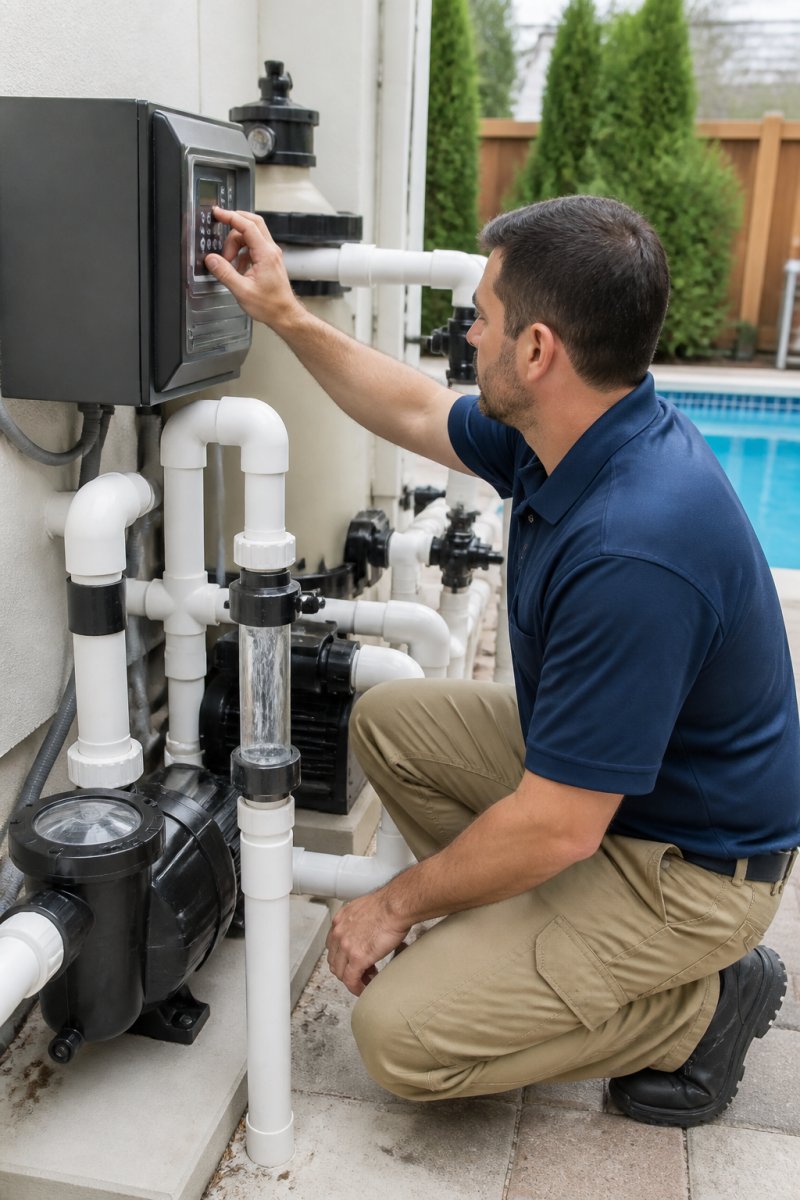
Variable-speed pumps top the list. We covered their energy savings already, 50% to 80% reductions in electricity consumption. But the secondary benefits matter too. Reduced pump speed means less cavitation, less wear on seals, and a longer operational life. You're not just saving on electricity; you're extending the pump's lifespan from eight years to twelve or more.
Solar heaters represent another smart upgrade.
Planning Your 5-Year Pool Maintenance Investment
Think of your pool maintenance as a five-year investment cycle. Year one focuses on establishing baseline conditions and identifying problem areas. Years two through four involve strategic upgrades and consistent preventative care. Year five is when you evaluate whether additional improvements make sense.
Frequently Asked Questions
How much can I save with preventative pool maintenance?
Preventative maintenance significantly reduces unexpected repair costs. Regular weekly cleaning, chemical balancing, and equipment checks catch small issues before they become expensive problems. Studies show homeowners who follow a preventative maintenance checklist avoid major equipment failures that can cost thousands. The investment in consistent care pays dividends over time, often saving thousands annually in repair costs.
Are variable-speed pumps worth the upfront investment?
Yes. Variable-speed pumps reduce energy consumption by 50% to 80% compared to traditional single-speed pumps, translating to significant utility bill reductions. With annual pool energy costs ranging from $300 to $800, the savings accumulate quickly. Many homeowners recover their equipment investment within a few years through lower operating costs, making variable-speed pumps a cost-effective upgrade for long-term savings.
What are the long-term savings of switching to a saltwater pool system?
Saltwater systems can deliver approximately $1,560 in annual savings by reducing chemical costs and maintenance needs compared to traditional chlorine systems. While the upfront equipment investment is higher, the reduced chemical usage and lower maintenance requirements pay off quickly. Over a 5-10 year period, the cumulative savings make saltwater systems one of the most impactful upgrades for long-term pool maintenance cost savings.
Should I do my own pool maintenance to save money?
DIY maintenance can save approximately $1,000 per year compared to professional service, but requires consistent time investment and technical knowledge. You must understand chemical balancing, filtration system maintenance, and equipment troubleshooting. For busy homeowners, the time commitment often outweighs savings. Professional services ensure proper maintenance, catch problems early, and typically cost less than emergency repairs from neglected upkeep.


Comments
Post a Comment