Pool Heater Reviews: 7 Best Models for 2026
Table of Contents
- How We Evaluated the Top Pool Heaters
- Gas vs Electric Pool Heater: Key Differences
- Pool Heater Sizing Guide: BTU Requirements
- Top Gas Pool Heater Reviews
- Top Electric and Heat Pump Pool Heater Reviews
- Pool Heater Maintenance Tips for Longevity
- Total Cost of Ownership and Smart Integration
- Conclusion: Which Pool Heater Is Right for You?
- Frequently Asked Questions
Last Updated: October 1, 2026
How We Evaluated the Top Pool Heaters
The U.S. pool equipment market generates roughly $6.2 billion in annual sales, and heaters are one of the biggest purchase decisions a pool owner faces. According to PoolDial's 2026 pool equipment market statistics, that figure covers pumps, heaters, and automation systems combined. Choosing the wrong pool heater means years of higher bills and slower heat-up times.
Gas vs Electric Pool Heater: Key Differences
Gas pool heaters burn natural gas or propane to heat water fast, while electric heat pumps pull warmth from the air and move it into your pool slowly but cheaply. The gap in operating cost is dramatic. According to Arctic Heat Pumps' 2026 buyer's guide, energy-efficient heat pumps use up to 80% less energy than standard electric resistance heaters.
| Factor | Gas Heater | Heat Pump |
|---|---|---|
| Heat-up speed | Fast (hours) | Slow (1-2 days) |
| Operating cost | Higher | Lower |
| Cold-weather performance | Strong | Drops below 50°F |
| Upfront cost | Moderate | Higher |
| Best for | Spas, quick heating | Seasonal extension |
Pool Heater Sizing Guide: BTU Requirements
Sizing a pool heater comes down to matching BTU output to the actual heat loss your pool experiences, not just its gallon count. The rule of thumb most manufacturers publish is 5,000 BTUs per hour for every 10,000 gallons to raise water temperature roughly one degree per hour. A 20,000-gallon pool needs about 100,000 BTUs; a 40,000-gallon pool needs 200,000 or more.
- Surface area, not just volume. Heat escapes from the top of the water, so a wide, shallow pool loses more heat than a narrow, deep one with the same gallon count. A 16 x 32 ft pool has 512 sq ft of surface; a 20 x 40 ft pool has 800 sq ft and needs proportionally more BTUs even at similar depth.
- Ambient air temperature and wind. A heater sized for a 75°F spring day will struggle on a 55°F night with a breeze. Wind strips heat from the surface faster than still air, which is why a windbreak or a solar blanket changes the BTU math more than most buyers expect.
- Cover vs. no cover. An uncovered pool can lose the majority of its heat overnight. A solar blanket or automatic cover dramatically reduces the BTU load, sometimes letting you drop a full size in heater capacity.
- Above-ground vs. inground. Above-ground pools lose heat faster through thinner walls and often sit in more exposed locations. Many above-ground owners find a heat pump sized at the low end of the range performs well only when paired with a cover.
Sizing by Heater Type
Gas heaters and heat pumps are sized differently because they heat at different rates:
| Heater Type | Sizing Approach | Typical Residential Range |
|---|---|---|
| Natural gas or propane | Size to the largest BTU you can supply; gas heats fast and can be cycled | 150,000-400,000 BTU |
| Heat pump | Size to the pool's steady-state heat loss, not peak demand | 50,000-140,000 BTU |
| Electric resistance | Small pools and spas only; very high operating cost per BTU | 5,500-11,000 BTU |
| Solar | Sized by collector square footage, roughly 50-100% of pool surface area | Varies by array |
A Simple Sizing Worksheet
- Measure your pool's surface area in square feet (length x width for a rectangle).
- Note your target temperature and the coldest air temperature you plan to swim in.
- Decide whether the pool will be covered during heating.
- Use the 5,000 BTU per 10,000 gallons rule as a starting point, then add capacity for surface area, wind exposure, and no cover.
- Confirm your gas line or electrical service can support the unit before you buy.
If the math puts you between two sizes, most practitioners recommend the larger unit for gas and the correctly sized unit for a heat pump, since an oversized heat pump cycles inefficiently and wears faster.
Top Gas Pool Heater Reviews
Pentair MasterTemp
The MasterTemp is the go-to choice for homeowners who want fast heat in an inground pool or spa. Its compact footprint fits tight equipment pads, and the digital display makes temperature control simple. Low-NOx emissions keep it compliant in stricter air-quality districts. The tradeoff is real: expect higher monthly fuel costs than a heat pump.
Hayward H-Series
Hayward's H-Series scales from small pools to large ones with capacities up to 400K BTU. The corrosion-resistant heat exchanger handles harsh water chemistry better than most competitors, and the control panel is genuinely intuitive. You'll need a professional gas line installation, which adds to the project.
Pentair ETi 400
If efficiency drives your decision, the ETi 400 is the gas heater to beat. Its 96% thermal efficiency rating leads the category, and direct-vent sealed combustion allows indoor or outdoor installation. The higher upfront investment pays back over years of lower gas consumption.
Raypak Gas Pool Heater
Raypak built its reputation on durability. The copper fin tube heat exchanger and powder-coated cabinet resist outdoor elements well, and the digital ignition system starts reliably. One caveat: the heat exchanger needs regular maintenance to stay efficient.
Top Electric and Heat Pump Pool Heater Reviews
EcoSmart Electric Pool Heater
The EcoSmart suits smaller pools and spas where no gas line exists. It produces zero emissions, installs quickly, and the flow sensor activation prevents dry-run damage. Electricity costs can run higher than gas, so it makes the most sense for occasional use.
Kremer BluePlenum 58,000 BTU
Kremer's heat pump extends your swim season efficiently for medium-sized residential pools. The 58,000 BTU capacity pairs with a high coefficient of performance, and quiet operation means you won't hear it from the patio. Performance drops in very cold ambient air, so it's a seasonal tool rather than a year-round one.
Natural Gas Pool Heater (Generic Model 014939)
Available through major retail channels, this standard natural gas unit lists at $3,363.90. It offers a basic feature set, an adjustable thermostat, and a safety pressure relief valve. Standardized parts make repairs straightforward.
Pool Heater Maintenance Tips for Longevity
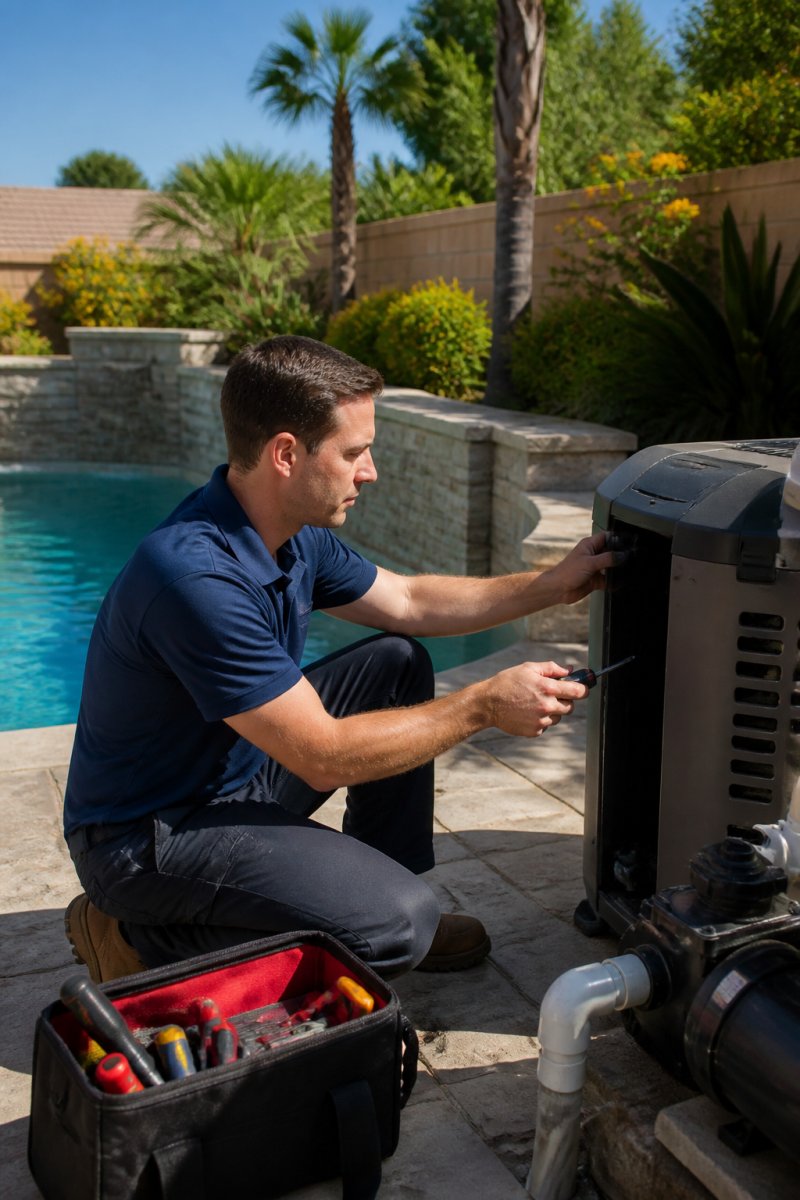
Pool heater maintenance tips start with water chemistry. Balanced pH prevents scale buildup inside the heat exchanger, which is the number one killer of gas heaters. Here's a practical checklist:
- Test pH and alkalinity weekly; keep pH between 7.4 and 7.6
- Rinse the heat pump's evaporator coil monthly during swim season
- Check the filter and clear debris before every heating cycle
- Inspect the heat exchanger annually for corrosion or scaling
- Winterize properly, draining lines before the first freeze
Total Cost of Ownership and Smart Integration
Total cost of ownership separates the smart buy from the impulse buy, and it is the part of the decision most buyers get wrong. The purchase price is only the first line item. The rest is fuel, maintenance, and the equipment you add to make the heater work well.
What Actually Drives Long-Term Cost
Four factors determine what a heater costs you over five seasons:
- Local fuel rates. Natural gas is billed per therm, propane per gallon, and electricity per kilowatt-hour. The same heater can be cheap to run in one service territory and expensive in the next, so the comparison has to use your actual utility rates, not a national average.
- Coefficient of performance (COP). A heat pump's COP tells you how many units of heat it moves per unit of electricity. A higher COP means lower operating cost per degree of heat delivered, but COP falls as outdoor air temperature drops, so a heat pump's real-world efficiency depends on your climate.
- Heat loss and cover use. An uncovered pool loses heat overnight, which forces the heater to run longer. A solar blanket or automatic cover reduces that loss substantially and is often the single highest-return accessory a pool owner can add.
- Maintenance and service life. Gas heaters need periodic heat exchanger inspection and water chemistry control to avoid scale. Heat pumps need coil cleaning and clear airflow. Deferred maintenance shortens service life and raises cost per season.
A Practical TCO Comparison
Rather than quoting a single national figure, build the comparison with your own numbers:
- Estimate the BTUs required to hold your target temperature for a season.
- Divide by your heater's efficiency (thermal efficiency for gas, COP for a heat pump) to get fuel units consumed.
- Multiply by your local rate for that fuel.
- Add annual maintenance and a reserve for eventual replacement.
- Compare the five-season total, not the first-year total.
Smart Integration: What It Actually Does
Smart integration is the newer angle, and it is where most buyer's guides stop short. Connecting a heater to a pool automation system lets you do three things that a standalone heater cannot:
- Schedule heating around off-peak electricity rates. If your utility offers time-of-use pricing, running a heat pump during lower-rate windows reduces operating cost without changing the equipment.
- Coordinate the heater with the pump and cover. Automation can raise pump speed only when the heater is firing, and close a cover before the heater starts, which reduces heat loss and runtime.
- Monitor and alert. Most modern controllers log runtime, temperature, and fault codes, so you can catch a failing heat exchanger or a dirty coil before it becomes a repair.
Conclusion: Which Pool Heater Is Right for You?
The right pool heater depends on how you use your pool. Gas models like the Pentair ETi 400 or Hayward H-Series suit owners who want fast heat and year-round swimming. Heat pumps like the Kremer BluePlenum reward patient owners with lower bills and a longer season.
Frequently Asked Questions
What is the cheapest way to heat a pool?
Solar blankets are the most cost-effective method, reducing heating bills by 50-70% according to U.S. Department of Energy data. Pairing a solar blanket with an energy-efficient heat pump, which uses up to 80% less energy than standard electric heaters, offers the lowest long-term operating costs. While the upfront investment in a heat pump is higher, the monthly savings often justify the expense for homeowners who heat their pools regularly.
How do I choose between a gas heater and a heat pump?
Choose a gas heater if you need rapid heating or live in a cooler climate where ambient air temperatures drop below 50°F, as heat pumps lose efficiency in cold weather. Opt for a heat pump if you want lower operating costs and have moderate temperatures year-round. Gas heaters have higher monthly fuel costs but faster recovery times, while heat pumps cost more upfront but use up to 80% less energy.
What size pool heater do I need for my specific pool volume?
Calculate your pool's volume in gallons, then determine the temperature rise needed (typically 20-30°F above ambient). Use the formula: BTU = gallons × temperature rise × 8.33 ÷ desired heating time in hours. For a 20,000-gallon pool with a 25°F rise heated in 24 hours, you need roughly 175,000 BTU. Always consult a professional to account for heat loss and local climate conditions.
Do pool heaters require professional installation and maintenance?
Yes, professional installation is essential for gas heaters due to gas line connections and venting requirements. Heat pumps also benefit from expert setup to ensure proper voltage and flow rates. Annual maintenance, including heat exchanger cleaning and checking the digital thermostat, extends equipment life. Many homeowners rely on professional pool services for routine inspections and repairs to avoid costly breakdowns.
Is a pool heater worth the investment for residential pools?
A pool heater extends your swimming season and increases pool usage, making it worthwhile for many homeowners. Long-term savings depend on fuel type and usage. Heat pumps offer the lowest operating costs in moderate climates, while gas heaters provide faster heating for spas and on-demand use. Consider your climate and how often you swim to determine the best value.
A failing heater rarely announces itself until the water turns cold mid-season. EcoClean Pool Services, Llc. keeps your system running with expert pool heater repairs, routine equipment upgrades, and eco-friendly UV/Ozone treatment that supports cleaner water and easier maintenance. Get started with EcoClean Pool Services, Llc. and keep your pool warm, clear, and ready every season.


Comments
Post a Comment