Weekly Residential Pool Cleaning: A 2026 Guide
Table of Contents
- What Weekly Residential Pool Cleaning Includes
- Pool Cleaning Frequency and Seasonal Considerations
- Questions to Ask a Pool Service Company
- Understanding Pool Service Guarantees
- Pool Cleaning Service Checklist for Homeowners
- Why Professional Weekly Service Saves Time and Protects Your Investment
- Frequently Asked Questions
Last Updated: October 5, 2026
What Weekly Residential Pool Cleaning Includes
Weekly residential pool cleaning keeps your pool safe, clear, and ready to use. At EcoClean Pool Services, we handle everything from surface debris to chemical balancing each visit.
Each visit starts with skimming leaves, twigs, and debris and emptying skimmer and pump baskets, preventing clogs and keeping circulation smooth.
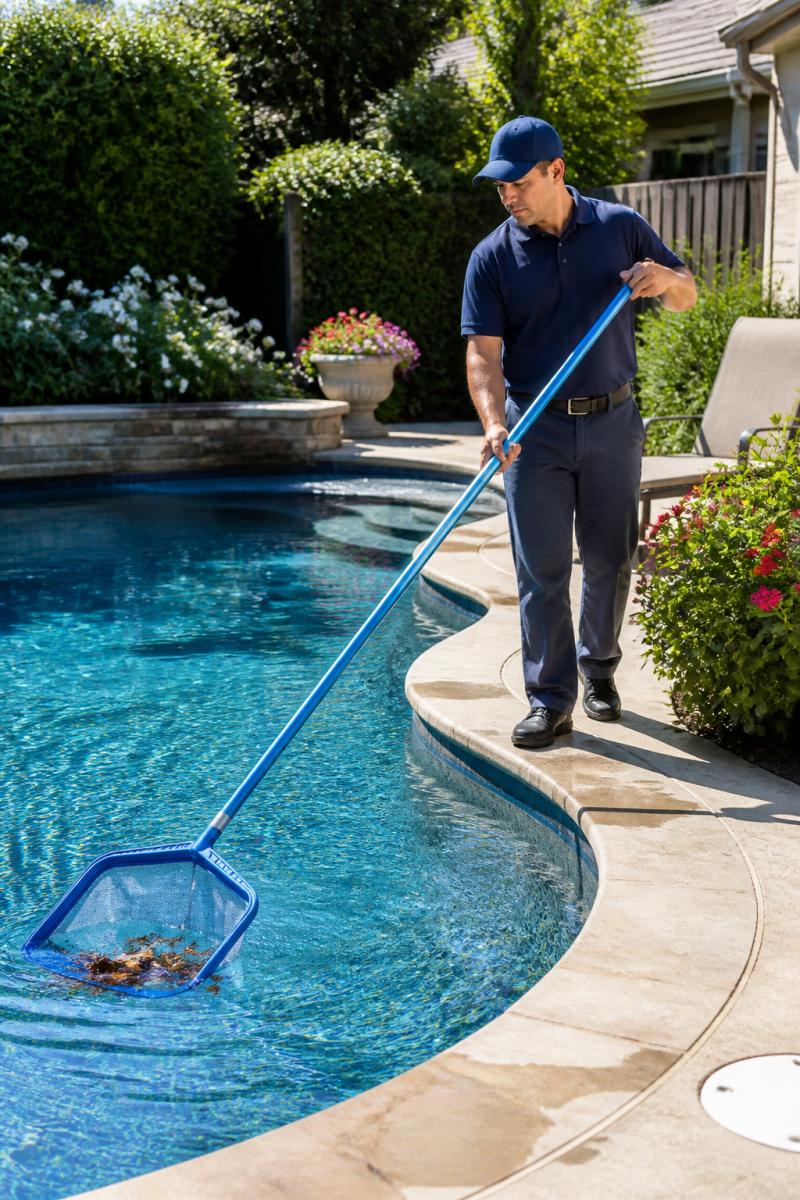
Routine cleaning tasks
We brush walls and steps to prevent algae and staining, then vacuum the floor to remove settled debris, protecting the surface and extending equipment life.
Filter maintenance is critical. We monitor filter pressure and clean or backwash as needed.
Water testing and chemical balancing
Each week we test pH, chlorine, alkalinity, and calcium hardness. Balanced water prevents algae, protects equipment, and keeps swimmers safe.
Chemical adjustment is part of weekly residential pool cleaning: we add sanitizers, adjust pH, and monitor mineral levels, preventing green-pool problems that require costly repairs later.
Pool Cleaning Frequency and Seasonal Considerations
Most residential pools benefit from weekly service, though each visit shifts with the calendar. A weekly schedule maintains water quality, prevents equipment strain, and catches small problems before they become expensive repairs.
Why weekly service works for most residential pools
Weekly visits create a predictable rhythm: your technician spots equipment issues early and maintains consistent chemistry, costing less than emergency repairs.
The U.S. swimming pool cleaning services industry includes tens of thousands of businesses serving residential and commercial properties, with weekly maintenance as the standard offering. IBISWorld Swimming Pool Cleaning Services Industry Data shows how central routine weekly service is to pool ownership.
Weekly service also spreads costs predictably: consistent maintenance prevents the large repair bills that follow equipment failure.
How local conditions change the weekly routine
The area's climate creates distinct maintenance seasons, each stressing a different part of the pool system.
Late spring through early summer, pollen and cottonwood. Live oaks, pecan trees, and crape myrtles release heavy pollen, and cottonwood fluff can clog skimmers within days. Technicians often empty baskets mid-visit and may recommend a finer-mesh net or skimmer sock.
Peak summer, heat, evaporation, and algae pressure. With air in the upper 90s and water past 85°F, chlorine demand rises and algae can bloom within 24 to 48 hours of a chemistry slip.
Storm season, dilution and debris surges. Heavy rain dilutes chlorine, raises pH, and dumps leaves, roof grit, and runoff into the pool. After a significant storm, a single weekly visit may not suffice; the pool often needs a post-storm shock and debris cleanup.
Fall and winter, leaves and reduced demand. Deciduous trees drop leaves for weeks, so the pool may need skimming every few days even with weekly service. Cooler water slows algae growth and reduces chlorine consumption.
Signs your pool needs more than weekly service
Weekly service handles routine maintenance, but some situations call for an extra visit or different treatment:
- The water turns cloudy or green between visits, which usually means chlorine demand is outpacing the current dose.
- Combined chlorine (chloramines) reads above 0.5 ppm, indicating the pool needs shocking rather than routine chlorination.
- Filter pressure rises 8 to 10 psi above the clean baseline, signaling the filter needs cleaning or backwashing before the next scheduled service.
- The pool loses more than a quarter-inch of water per day beyond normal evaporation, which can point to a leak.
- Persistent algae returns within days of treatment, often a sign of high stabilizer, high phosphates, or poor circulation.
Catching these signals early separates a pool that stays clear all season from one needing an acid wash or equipment replacement.
Questions to Ask a Pool Service Company
Before hiring a weekly residential pool cleaning service, know what to ask. The right questions reveal whether a company will show up, deliver quality work, and stand behind it.
Ask whether weekly service includes filter cleaning or bills it separately, and clarify what happens each visit: skimming, brushing, vacuuming, chemical testing, and equipment checks. Ask how they handle equipment repairs or whether they refer you elsewhere.
Ask about their service guarantee: what happens if they miss a visit, and do they reschedule or offer a credit? Also ask their response time for equipment problems and whether they can diagnose failing pumps or heaters.
Ask whether technicians are CPO-certified or formally trained, since certification signals knowledge of water chemistry, equipment safety, and chemical handling. Request local references.
Finally, ask about their water treatment approach: traditional chlorine or advanced systems like UV or ozone? Knowing their methods helps you judge whether they match your priorities, especially if you want eco-friendly options.
Understanding Pool Service Guarantees
A service guarantee tells you what happens when something goes wrong. Most homeowners never read the agreement until there's a problem, when the terms are already locked in. Evaluate it before you sign.
What a strong weekly service agreement should address
A well-written agreement covers five areas. If any is vague or missing, get clarification in writing before you commit.
1. Missed visits. The agreement should state how quickly a missed appointment is rescheduled and whether a service credit applies.
2. Scope of each visit. The agreement should list weekly tasks: skimming, brushing walls and steps, vacuuming, emptying baskets, testing and adjusting chemicals, and inspecting equipment.
3. Chemical charges. Some companies include chemicals in the weekly rate; others bill chlorine, acid, algaecide, and shock separately.
4. Repair and workmanship warranty. If the company replaces a pump, heater, or filter, the agreement should state whether workmanship is warranted, for how long, and whether the manufacturer's warranty passes through to you.
5. Exclusions. Most agreements exclude damage from misuse, neglect, extreme weather, pre-existing conditions, and equipment age. That's reasonable, but exclusions should be specific; a blanket 'no liability for any damage' clause is a red flag.
How to compare two providers on paper
When two weekly service quotes look similar, the differences hide in the details. Compare the agreements side by side:
| Item | What to look for |
|---|---|
| Visit frequency | Weekly, with a stated make-up policy for holidays and weather |
| Included tasks | Written list, not a verbal promise |
| Chemical billing | Included in rate or itemized; ask for a sample invoice |
| Filter service | Included, scheduled separately, or billed per occurrence |
| Documentation | Service notes, photos, or a portal after each visit |
| Repair policy | Who diagnoses, who quotes, who performs the work |
| Workmanship warranty | Length and what it covers |
| Cancellation terms | Notice period and any early-termination conditions |
A provider that documents every visit with notes and photos is easier to hold accountable, and the maintenance history helps when you sell the home or file a warranty claim.
Questions that reveal how a company actually operates
- What happens if my pool turns green despite weekly service? A clear answer describes the treatment plan and whether it's included.
- Who pays for chemicals if my pool needs extra shock after a storm? The answer reveals whether the weekly rate is truly all-inclusive.
- Can I see a sample service report? This shows what documentation you'll receive.
- How are technicians trained, and are they certified? Certification indicates knowledge of water chemistry, equipment safety, and chemical handling.
- What's the process to cancel or pause service for a season? A straightforward answer signals a well-run operation.
If a provider will not put the scope, chemical billing, and missed-visit policy in writing, treat that as a signal. Verbal assurances are difficult to enforce, and the details you cannot see are usually the ones that cost you later.
Reading the fine print without a lawyer
You don't need legal training to spot the clauses that matter. Look for language about automatic renewal, price adjustment notice, and arbitration. Check whether the company can change the scope of service with notice, and how much notice. Confirm the agreement names the specific services you discussed, not a generic 'pool maintenance' description.
A guarantee is only as good as the company's willingness to honor it. The clearest agreements are short, specific, and plain. If you need a translator to understand your contract, ask for a plain-English summary before signing.
Pool Cleaning Service Checklist for Homeowners
Use this checklist to evaluate whether your weekly residential pool cleaning service delivers what you're paying for. Review it monthly to catch gaps early.
| Task | Frequency | Status |
|---|---|---|
| Skimming surface debris | Every visit | ☐ |
| Emptying skimmer basket | Every visit | ☐ |
| Emptying pump basket | Every visit | ☐ |
| Brushing walls and steps | Every visit | ☐ |
| Vacuuming pool floor | Every visit | ☐ |
| Testing pH and chlorine | Every visit | ☐ |
| Adjusting chemicals as needed | Every visit | ☐ |
| Filter cleaning/backwashing | Every 3-4 months | ☐ |
| Equipment inspection | Every visit | ☐ |
| Documentation/service notes | Every visit | ☐ |
Print this checklist and keep it near your pool. After each visit, mark off completed tasks. If the same task is consistently missed, contact your provider. A reliable service completes every item and documents its work.
Ask your provider to photograph or note equipment issues they spot, creating a record for future repairs. Track chemical levels over time; if they consistently drift one direction, investigate.
If your technician stops showing up on schedule or consistently skips tasks, address it immediately. A pattern of missed appointments or incomplete work suggests the company is overbooked or cutting corners. Don't wait for a major problem to switch providers.
Why Professional Weekly Service Saves Time and Protects Your Investment
Your pool is a significant investment. Weekly residential pool cleaning protects it and frees your time for enjoying the water instead of maintaining it.
DIY maintenance requires learning water chemistry, equipment operation, and troubleshooting. Professional service handles all of it.
Professional technicians catch small problems early, a failing pump, slow leak, or early algae growth, before they become expensive. This preventive approach extends equipment life and avoids emergency repairs.
Water chemistry knowledge matters too: improper adjustment can damage surfaces, corrode equipment, or create unsafe swimming.
Regular service also maintains your pool's appearance: clear water, clean walls, and a debris-free surface make your backyard inviting, so you use the pool more and get more from your investment.
Keeping your pool in top condition requires consistency and expertise. Weekly residential pool cleaning prevents expensive problems, saves time, and keeps your pool safe and ready to enjoy.
Frequently Asked Questions
What does weekly residential pool cleaning include?
Weekly residential pool cleaning typically includes skimming debris from the water surface, brushing pool walls and steps, vacuuming the floor, emptying skimmer and pump baskets, testing water chemistry, and adjusting chemical levels. Many providers also inspect equipment and perform filter maintenance every 3-4 months as part of their service plan. The exact scope depends on your service agreement, so confirm what's included before signing up.
How often should a residential pool be professionally cleaned?
Most residential pools benefit from weekly professional cleaning and maintenance. Weekly service keeps water balanced, prevents algae growth, and catches equipment issues early. However, pool cleaning frequency can vary based on pool size, usage, weather, and whether you have trees nearby that drop debris. Some homeowners with minimal debris opt for bi-weekly service, while heavily-used pools may need more frequent attention. A qualified technician can recommend the right frequency for your specific situation.
What questions should I ask before hiring a pool service company?
Ask about service inclusions (cleaning, chemical balancing, equipment checks), frequency and scheduling reliability, technician certifications, what happens if equipment fails, warranty or service guarantees, and whether they offer emergency repairs. Request references from current customers and verify they service pools like yours. Confirm whether they provide written service reports. Understanding these details helps you compare providers and avoid surprises.
What should a pool service guarantee cover?
A solid pool service guarantee should cover the work performed during maintenance visits, equipment repairs, and water quality standards. It should specify what happens if a technician fails to show up as scheduled, if chemical levels fall out of safe range, or if repairs don't resolve the issue. The guarantee should clearly define your recourse, whether that's a service credit, re-visit at no charge, or parts replacement. Always ask for the guarantee in writing before committing to a service provider.


Comments
Post a Comment